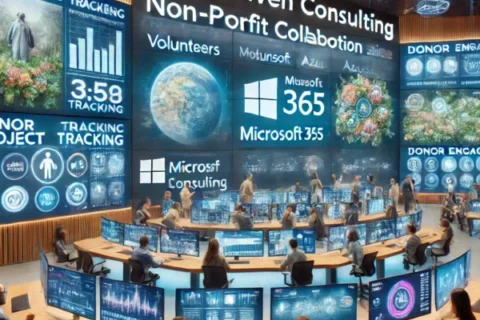
Non – Profit – Virtual & Augmented Reality for Storytelling
Transform Your Fundraising with Virtual Reality: Unlocking the Power of Immersive Storytelling for Non-Profits
In the rapidly evolving landscape of non-profit fundraising, embracing cutting-edge technology can make all the difference in captivating your audience and enhancing donor engagement. Virtual Reality and Augmented Reality are revolutionizing how non-profits tell their stories, offering a powerful tool to create immersive donor experiences that transcend traditional methods. By leveraging AI-enhanced storytelling through Microsoft’s Mixed Reality Toolkit, organizations can craft interactive fundraising campaigns that resonate deeply with supporters. With Azure Kinect and HoloLens solutions, non-profits can elevate mission awareness and foster stronger connections with donors. This post will explore how these advanced technologies can transform your fundraising efforts, positioning your organization at the forefront of non-profit technology innovation.
Revolutionizing Fundraising with Immersive Storytelling
The landscape of non-profit fundraising is dramatically transforming with the advent of immersive technologies. This section explores how Virtual Reality (VR) and Augmented Reality (AR) reshape how organizations connect with donors and tell their stories.
Leveraging Virtual Reality for Impact
Virtual Reality offers non-profits a powerful tool to create impactful, immersive experiences that resonate with donors on a deeper level. Organizations can foster empathy and understanding like never before by transporting supporters into the heart of their cause.
VR allows donors to witness firsthand the challenges and triumphs of those they’re helping. For instance, a wildlife conservation non-profit might use VR to take supporters on a virtual safari, showcasing endangered species in their natural habitats.
This technology educates and creates an emotional connection that traditional methods can’t match. Studies have shown that VR experiences can increase empathy and motivation to take action, making it a valuable asset for fundraising campaigns.
By leveraging VR, non-profits can create memorable experiences that leave a lasting impression on donors, potentially leading to increased support and engagement.
Augmented Reality in Donor Engagement
Augmented Reality presents unique opportunities for non-profits to engage donors in interactive and innovative ways. By overlaying digital information onto the real world, AR can bring campaigns and impact stories to life right in front of supporters’ eyes.
One practical application of AR is in creating interactive donation experiences. For example, a non-profit focused on reforestation could develop an AR app that allows donors to plant virtual trees in their local park, visualizing the impact of their contributions.
AR can also enhance traditional fundraising materials. Imagine a direct mail piece that, when scanned with a smartphone, reveals a 3D model of a project or an animated infographic showcasing the organization’s achievements.
These engaging experiences capture attention and provide a tangible connection between the donor’s action and the non-profit’s mission, fostering a sense of involvement and impact.
Transforming Campaigns with Interactive Fundraising
Interactive fundraising leverages technology to create dynamic, engaging experiences beyond traditional donation methods. By incorporating gamification and real-time feedback elements, non-profits can make giving more rewarding and immersive.
One approach is to develop virtual events or challenges that donors can participate in from anywhere. For instance, a health-focused non-profit might create a virtual marathon where participants can track their progress in real-time and see their impact on the fundraising goal.
Another strategy is to use interactive storytelling platforms that allow donors to choose how their contributions are allocated. This level of transparency and control can significantly boost donor confidence and engagement.
By making fundraising interactive, non-profits can create a more compelling narrative around their cause, encouraging ongoing support and fostering a community of engaged donors.
Cutting-Edge Solutions for Non-Profits
As technology evolves, non-profits have access to various cutting-edge tools that can revolutionize their fundraising efforts. This section delves into specific solutions that are making waves in the sector.
Microsoft Mixed Reality Toolkit Applications
The Microsoft Mixed Reality Toolkit offers non-profits robust tools to create immersive experiences that can significantly enhance fundraising efforts. This open-source platform provides a foundation for developing applications that work across various mixed-reality devices.
Non-profits can leverage this toolkit to create virtual tours of their projects or facilities. For example, an organization focused on education in developing countries could build a VR experience that takes donors through a day in the life of a student they’re supporting.
The toolkit also enables the creation of interactive data visualizations. Imagine presenting complex impact data in a 3D, manipulable format that donors can explore and understand intuitively.
Utilizing the Mixed Reality Toolkit allows non-profits to develop professional-grade VR and AR experiences without extensive technical expertise, making immersive storytelling more accessible.
Engaging Donors with Azure Kinect
Azure Kinect is a developer kit that combines advanced AI sensors with robust software development tools, offering non-profits innovative ways to engage donors and create interactive experiences.
One application is in creating gesture-controlled interfaces for fundraising events. Donors could navigate through a virtual gallery of projects or make donations with simple hand movements, creating a futuristic and engaging experience.
Azure Kinect’s body-tracking capabilities can also be used to create immersive simulations. For instance, a disability rights organization could develop an experience that allows donors to understand the challenges faced by individuals with mobility impairments.
The depth-sensing technology in Azure Kinect can create 3D scans of artifacts or environments, allowing non-profits to preserve and share cultural heritage or environmental data in great detail.
HoloLens Solutions for Mission Awareness
Microsoft’s HoloLens, a mixed-reality headset, offers non-profits powerful tools for creating immersive experiences that can significantly boost mission awareness and donor engagement.
HoloLens can be used to create augmented reality exhibits at fundraising events. Donors could interact with holographic representations of projects, explore 3D models of buildings under construction, or view virtual wildlife in conservation efforts.
For educational non-profits, HoloLens can facilitate interactive learning experiences. Imagine a virtual science lab where donors can see the impact of their contributions on research and education in real time.
The device’s remote assistance capabilities also allow non-profits to offer virtual field trips, connecting donors directly with beneficiaries or staff in the field for a truly immersive and personal experience.
Empowering Non-Profits with Technology
Integrating advanced technologies is not just enhancing fundraising efforts; it’s fundamentally changing how non-profits operate and connect with their supporters. This section explores the broader implications of this technological shift.
Enhanced Donor Experiences Explained
Enhanced donor experiences leverage technology to create more meaningful, personalized interactions between non-profits and their supporters. These experiences go beyond traditional methods to foster deeper connections and understanding.
Key components of enhanced donor experiences include:
- Personalized storytelling that adapts to individual donor interests
- Interactive impact reports that allow donors to explore outcomes in detail
- Virtual reality experiences that immerse donors in the non-profit’s work
- Augmented reality applications that bring projects to life in donors’ environments
Research shows these enhanced experiences can increase donor retention and higher average gift amounts. By providing donors with a more tangible sense of their impact, non-profits can build stronger, long-lasting relationships.
Non-profit Technology as a Game Changer
Adopting cutting-edge technology is proving to be a game-changer for non-profits, transforming everything from operational efficiency to donor engagement. This shift is about new tools and a new mindset that embraces innovation.
The benefits of embracing non-profit technology include:
- Improved data analysis and decision-making
- Enhanced ability to reach and engage younger donors
- More efficient resource allocation and project management
- Greater transparency and accountability to stakeholders
Case studies have shown that non-profits leveraging technology effectively can significantly improve fundraising success and overall impact. For example, one organization reported a 30% increase in donations after implementing a VR-based storytelling campaign.
However, non-profits must approach technology adoption strategically, ensuring that new tools align with their mission and capacity.
The Future of Fundraising with VR/AR
As Virtual and Augmented Reality technologies continue to evolve, they promise to reshape the future of non-profit fundraising in profound ways. These immersive technologies offer unprecedented opportunities for storytelling and donor engagement.
Potential future applications include:
- Fully immersive virtual volunteering experiences
- AR-enhanced peer-to-peer fundraising campaigns
- VR-based donor education and empathy-building programs
- Mixed reality events that blend physical and virtual elements
Experts predict that as VR/AR technology becomes more accessible and user-friendly, it will become an integral part of non-profit communications and fundraising strategies.
“VR and AR have the potential to revolutionize how we connect with donors, allowing us to create experiences that are not just seen but felt,” says Dr. Emily Chen, a non-profit technology researcher.
While the full potential of these technologies is still being explored, forward-thinking non-profits are already positioning themselves to leverage VR and AR for more impactful and engaging fundraising efforts.